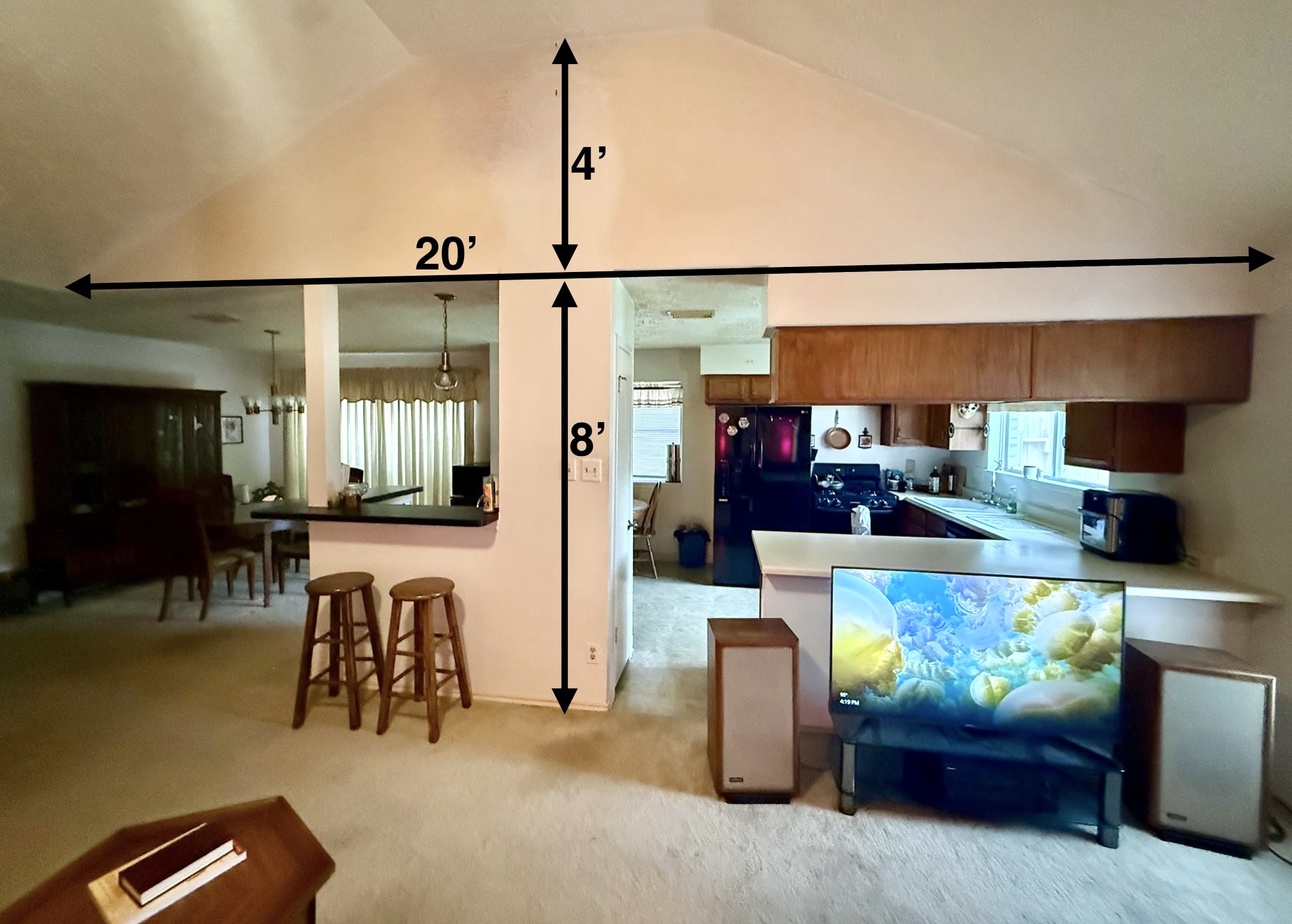
Full DIY Guide
1
Prep the Room
- Move furniture to the center or another room; cover with canvas/plastic drop cloths.
- Turn off circuit breaker for the wall and remove faceplates (label screws).
- Apply painter’s tape along ceiling, baseboards and adjacent walls; press down edges firmly for crisp lines.
2
Prep the Wall
- Clean entire surface with a TSP substitute (or degreasing cleaner) and allow to dry completely.
- Use a 5-in-1 tool to gently scrape bubbling paint; fill holes and shallow divots with lightweight spackling in thin layers.
- Let spackle fully dry per product instructions (often 30–60 min for lightweight products).
3
Sand
- Sand spackled areas with a 120–180 grit sanding sponge until flush and smooth.
- Run your hand over repaired spots; if you feel ridges, sand again. Wipe the wall with a damp cloth to remove all dust and let dry.
4
Prime
- Cut in with a 2–3" angled sash brush along taped edges and around outlets.
- Roll primer with a 9" roller using a 3/8" nap in "W" patterns (3'×3' sections), blending as you go.
- Let primer dry fully (Zinsser Bulls Eye 1-2-3 dries to touch in ~30 minutes; follow label for recoat).
5
Paint — First Coat
- Cut in all edges and corners with the angled sash brush using the final paint color.
- Roll the paint the same way you primed; keep a wet edge to avoid lap marks.
- Check paint in several lights (daylight + incandescent) — matched paint should look consistent.
6
Paint — Second Coat & Tape Removal
- Allow first coat to dry (check the can; typically 2–4 hours) and apply a second coat the same way.
- Remove painter’s tape at a 45° angle while paint is still slightly tacky to ensure crisp lines.
- Let paint cure for 24 hours before heavy use; wait to reinstall outlet covers until fully dry.
Cleanup & Finish
Wash brushes/rollers with warm soapy water (for latex), seal leftover paint, label can with room & date, fold drop cloths, and restore furniture after paint is fully cured.